
DevOps & Cloud Deploymentby SoftwareCrafting
Hostinger VPS deployment, CI/CD, Docker, server configuration and monitoring by SoftwareCrafting, with tested backups and clear operational handover.
No sales calls. Written reply in under 4 working hours.
Delivery Time
1-4 weeks depending on infrastructure complexity
Service Overview
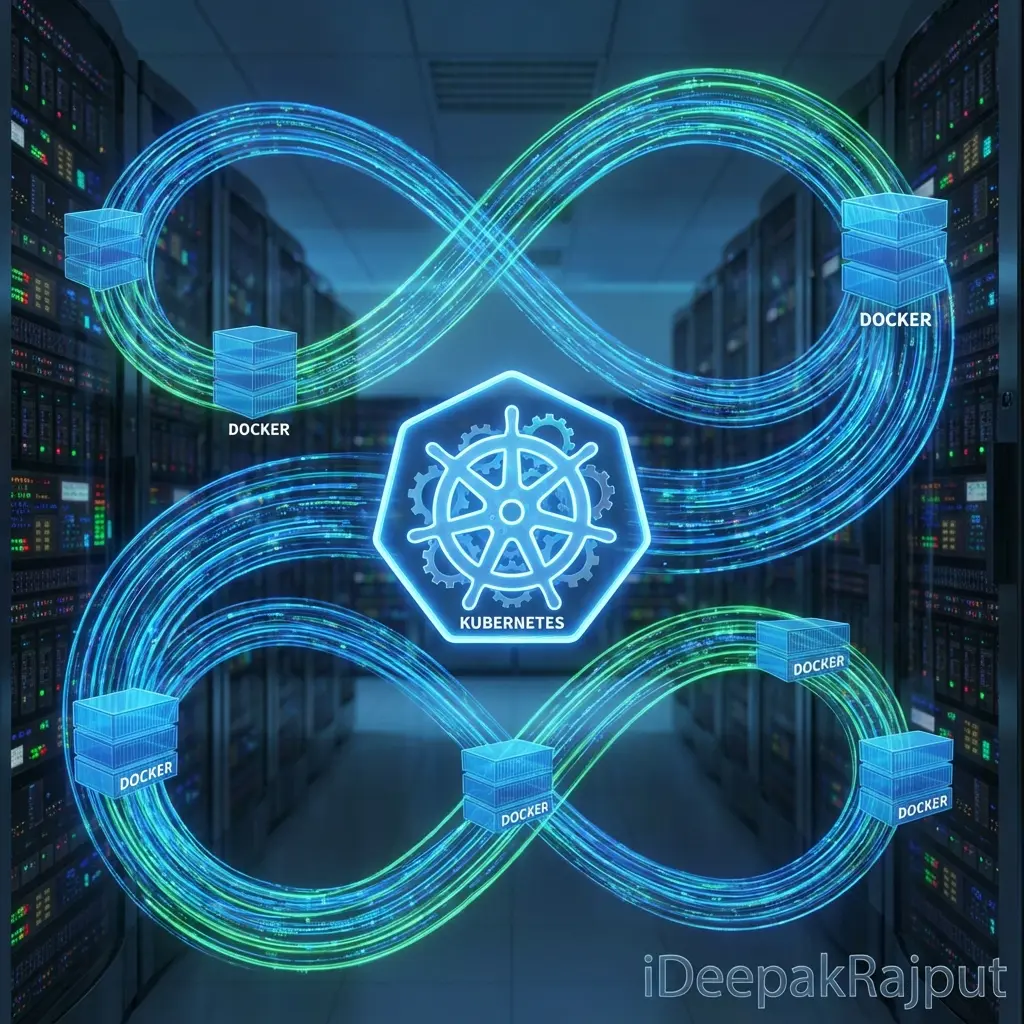
Our production application servers are hosted on Hostinger. We configure the server, deploy the application, set up HTTPS, monitoring and backups, and document how your team maintains it. We build the deployment and infrastructure layer that lets a team ship confidently several times a day instead of nervously once a fortnight. That means infrastructure defined as code so environments are reproducible and reviewable, continuous delivery pipelines that run tests and deploy without manual steps, and environments that actually match each other so a bug does not appear only in production. We work across AWS, Google Cloud, Vercel, and Kubernetes, and we size the solution to your team: a small team does not need a service mesh, and putting one in front of them creates a system nobody can debug at two in the morning. The operational side matters as much as the pipeline. Deployments are zero downtime with a fast rollback, secrets are managed properly rather than living in environment variables someone pasted from Slack, backups are tested by restoring them, and alerts point to runbooks. We also review cloud spend, which on most accounts has meaningful savings sitting in unused resources and wrong sized instances.
Technologies we use
Key Features
- Hostinger VPS setup, deployment and production server management
- AWS cloud deployment and management
- Docker containerization
- CI/CD pipeline setup
- Server configuration and optimization
- Database optimization and scaling
- SSL certificate installation
- CDN setup and configuration
- Monitoring and alerting systems
- Backup and disaster recovery
- Security hardening
- Performance optimization
- Load balancing
- Auto-scaling configuration
- Log management and analysis
- Infrastructure as code with Terraform, CDK, or Pulumi
- Zero downtime deployment with automated health checks and fast rollback
- Environment parity so defects do not appear only in production
- Secrets management with rotation and least privilege access
- Backup strategy verified by actually performing restores
- Cloud cost review with rightsizing and unused resource cleanup
- Security hardening across network, IAM, and container images
- Runbooks and on call setup handed over to your team
Also part of this service
Cloud Infrastructure & Management
We take over the running of cloud infrastructure so your engineers can build product instead of maintaining the platform underneath it. That covers the whole operational surface: infrastructure defined as code so nothing exists that is not reviewable, environments that genuinely match, network and IAM configured to least privilege, patching and upgrades handled on a schedule rather than after an incident, and monitoring that pages a human only when a human is needed. We work across AWS, Google Cloud, and Azure, and we prefer managed services over self hosted equivalents unless there is a specific reason, because the operational cost of running your own database or message broker is usually larger than the licence saving. Cost is treated as an ongoing discipline rather than a one off review: tagging so spend is attributable to teams and features, rightsizing against observed usage, committed use pricing where the baseline is predictable, and non production environments that shut down outside working hours.
- AWS, GCP, Vercel, and hybrid cloud deployment architecture
- Docker and Kubernetes setup for scalable workloads
- Terraform infrastructure-as-code for repeatable environments
- CI/CD pipelines with staging, preview, and production releases
- Cost optimization for compute, networking, storage, and databases
- Monitoring, logging, uptime checks, and alerting
Observability & Monitoring
We instrument systems so that when something breaks you can find out what and why in minutes rather than by guessing. That means structured logs with consistent fields you can actually query, distributed traces that follow a request across every service it touches, metrics that reflect what users experience rather than what is easy to measure, and alerts tied to symptoms your customers would notice instead of every CPU spike. We build on OpenTelemetry so instrumentation is portable and you are not locked into one vendor, and we work with Grafana, Datadog, Sentry, Prometheus, and the major managed backends. The part teams usually skip is the operational layer: service level objectives with error budgets, dashboards designed for the questions asked during an incident rather than every metric available, runbooks attached to each alert, and an on call rotation that does not burn people out. Instrumentation without those is just more data.
- OpenTelemetry instrumentation for traces, metrics, and logs
- Distributed tracing across services, queues, and databases
- Structured logging with consistent, queryable fields
- Service level objectives with error budgets and burn rate alerts
- Dashboards designed around incident questions, not metric inventories
- Alert rules tied to user visible symptoms
Serverless & Edge
We design and build serverless and edge architectures for teams who want to stop paying for idle servers and stop being paged about capacity. That covers Vercel and Cloudflare Workers at the edge, AWS Lambda and Step Functions for backend workloads, and the supporting pieces that decide whether serverless is pleasant or painful: cold start budgets, connection pooling for databases that were never designed for thousands of ephemeral clients, idempotency for retried invocations, and observability that works when there is no server to log into. We are equally willing to tell you when serverless is the wrong shape for your workload. Long running jobs, sustained high throughput, heavy compute, and workloads needing large in memory state are frequently cheaper and simpler on containers. Where the fit is genuine, the payoff is real: scaling to zero, per request billing, and deployment that stops being an operational event.
- Serverless architecture design on AWS Lambda, Vercel, or Cloudflare Workers
- Edge middleware for routing, authentication, personalisation, and A/B testing
- Cold start measurement and reduction through bundling and runtime choice
- Database connection pooling suited to ephemeral compute
- Event driven workflows with SQS, EventBridge, and Step Functions
- Idempotency keys and safe retry behaviour for at least once delivery
Developer Tooling
We build the internal tooling that decides how fast your engineering team can actually move: continuous integration pipelines that finish in minutes instead of an hour, local development environments that a new hire can start on day one, code generation and scaffolding that removes repetitive work, and internal CLIs and dashboards that replace the manual runbook nobody follows correctly. Most teams accumulate this stuff by accident, and the cost shows up as slow builds, flaky tests that everyone reruns, environments that only work on the machine of the person who set them up, and release processes that need one specific engineer. We treat developer experience as measurable: how long from commit to feedback, how long from a new laptop to a running application, how many manual steps between merging and production. We fix the slowest link, measure again, and hand over tooling documented well enough that your team maintains it without us.
- CI and CD pipeline design and optimization
- Build caching, test parallelization, and pipeline runtime reduction
- Monorepo setup and tooling with Turborepo, Nx, or pnpm workspaces
- Reproducible local development environments with Docker or devcontainers
- Internal CLI tools for common engineering and operational tasks
- Code generation, scaffolding, and project templates
Pricing Snapshot
Starting from ₹10,000 for complete DevOps setup and deployment
- Model: project
- Timeline: 1-4 weeks depending on infrastructure complexity
Our Delivery Process
We use an agile, transparent process to ensure your project is completed on time and meets exactly your needs.
Infrastructure Assessment
Analyzing current infrastructure and requirements
Architecture Design
Designing scalable and secure cloud architecture
Environment Setup
Setting up development, staging, and production environments
Deployment & Configuration
Deploying applications and configuring services
Monitoring Setup
Implementing monitoring and alerting systems
Documentation & Training
Providing documentation and team training
Why Choose SoftwareCrafting?
- Ship several times a day instead of once a fortnight
- Environments that match, so bugs reproduce where you can debug them
- Rollback in minutes when a release goes wrong
- Secrets handled properly rather than pasted between people
- Backups you have proven work, because you restored from them
Frequently Asked Questions
Where are SoftwareCrafting production servers hosted?
What cloud platforms does SoftwareCrafting work with?
Do you provide 24/7 monitoring for deployed applications?
Can you help with application migration to cloud?
What security measures do you implement?
Do we need Kubernetes?
Can you reduce our cloud bill?
How long does a migration to the cloud take?
What happens when something breaks at three in the morning?
Can you manage our existing AWS or Vercel setup?
We already have logs. Why is that not enough?
Which observability platform should we use?
Is serverless actually cheaper?
What about cold starts?
How much can CI time realistically improve?
Is this worth it for a small team?
Case Studies
See how we've delivered results for our clients.
Guides that support this service
Practical engineering notes connected to devops & cloud deployment decisions, architecture, and implementation trade-offs.
Related services
Services often paired with DevOps & Cloud Deployment
These internal links help buyers and search engines understand the full delivery path around this service.
Solutions & industries
Where teams use devops & cloud deployment
Explore the industry solutions and locations we deliver this capability for, or talk to a Delhi/India-based senior engineer.
Hosting and deployment
Our production servers are hosted on Hostinger
SoftwareCrafting uses Hostinger for its production application servers. We handle application deployment, server configuration, HTTPS, monitoring and backup planning. Choose a hosting plan around the application you need to run, the resources it uses and who will maintain it after launch.
Client Success & Reviews
See what our clients say about our DevOps & Cloud Deployment delivery.
"We had a 1-on-1 mentorship session covering everything we needed to get our app live - deploying on a VPS, submitting to the App Store and Play Store, and setting up our cloud infrastructure properly. The session was practical and easy to follow, with clear explanations at each step rather than just theory. We walked away with a real understanding of our deployment pipeline and the confidence to manage it ourselves going forward. Highly recommended for anyone who wants to actually understand their DevOps setup, not just have it done for them."
Aman Singh
Client
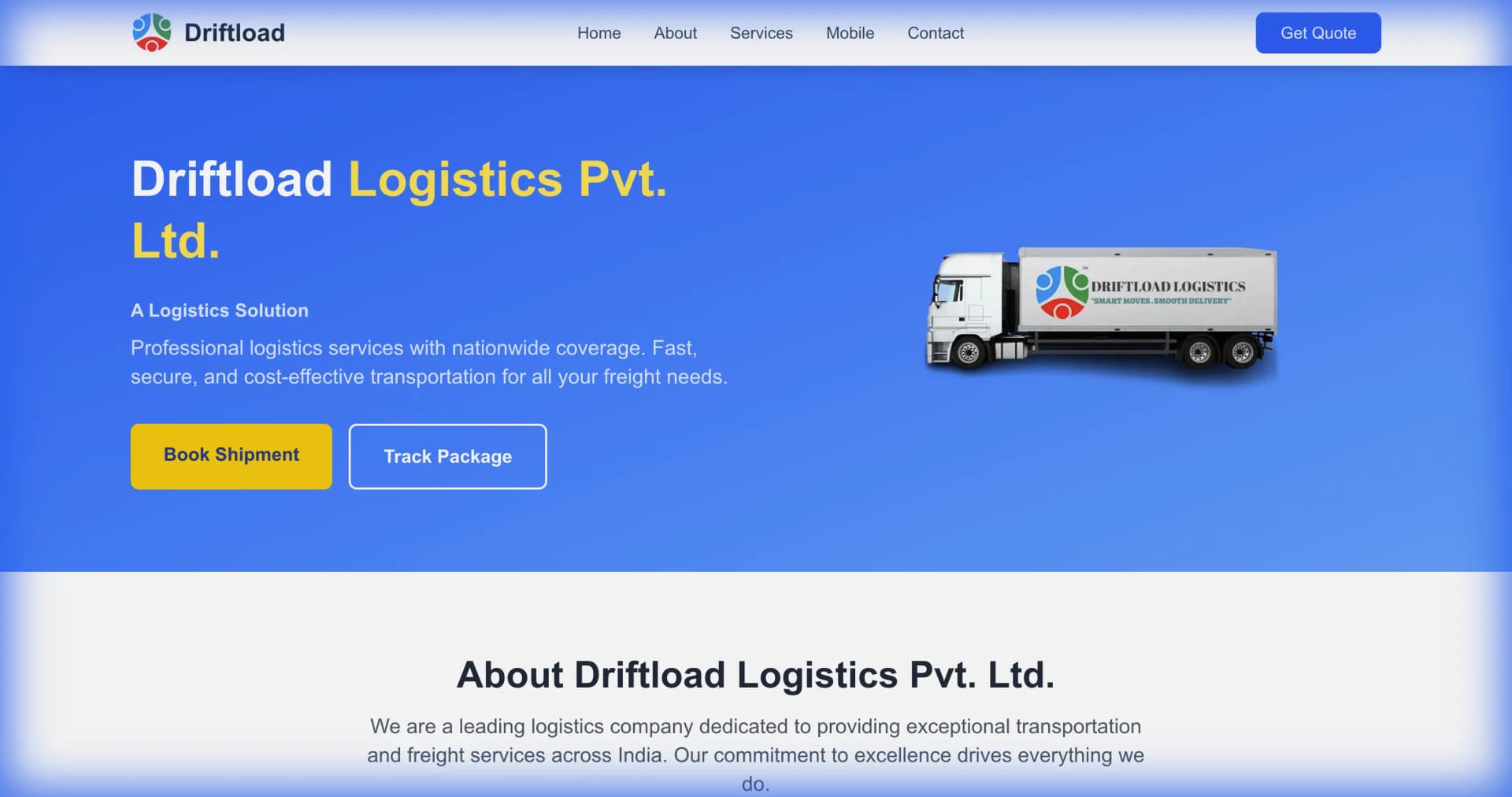
"Great experience working with the team on Driftload. They built our entire platform - driver app, customer booking app, website, admin panel, and backend server - all working together smoothly. Communication was clear throughout, they understood the complexity of coordinating multiple apps with a shared backend, and delivered everything on time. Highly recommended for anyone needing a full end-to-end platform built right."
Dhruv Singh
Client
Let's build your
next big thing.
Talk to the senior engineer who would build it. Send a short brief and get a written plan and price for your devops & cloud deployment project within 24 hours.
Quick Brief
Start the conversation here
Tell us about your devops & cloud deployment project and we'll reply with a technical response and next steps.
Your Name
Work Email
What do you need help with?